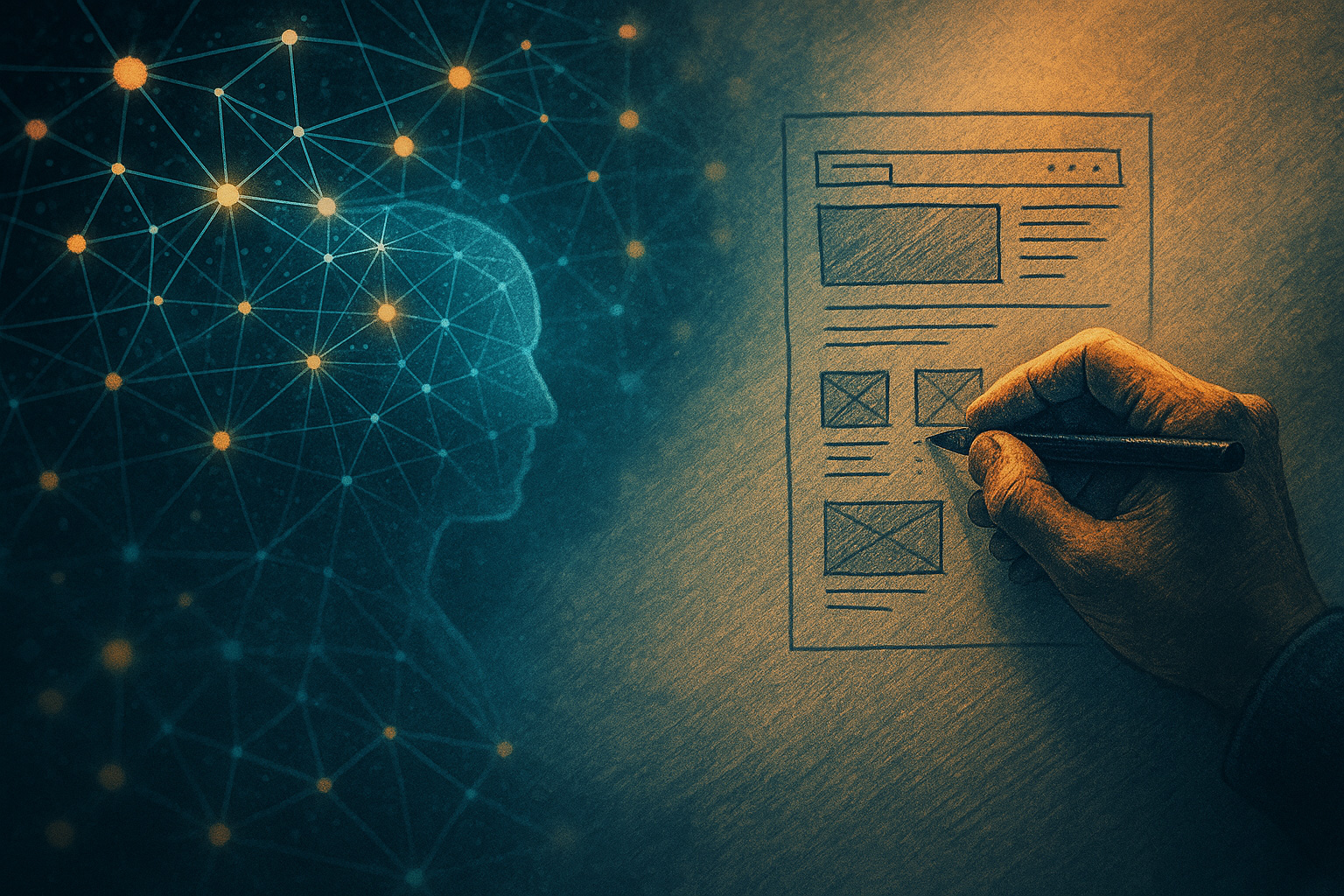
There’s a lot of hype around “AI” these days (put in quotes intentionally), but let’s be clear: what most people are calling AI today are really just large language models (LLMs) – extremely clever systems that predict the next word in a sequence, playing a wonderful, impressive game of “guess the next word.” They are not sentient, they are not autonomous problem-solvers, and we are still far from anything resembling true AGI. As Ray Kurzweil notes in my well-thumbed copy of The Singularity, “Artificial intelligence will reach human levels by around 2029. Follow that out to the singularity, and machine intelligence will be infinitely more powerful than human intelligence.” We are nowhere near that today – what we have is a powerful tool that amplifies expertise, not a replacement for it.
Put simply: LLMs work best when you already know the answer. They excel at completing solutions you’ve already envisioned, polishing drafts, organizing ideas, or scaling work – but they do not replace the experience, strategy, intuition, or critical thinking that comes from years of doing the work. When drafting website copy, for example, you still need to define your audience, your brand voice, your messaging, and your overall strategy. The model can help phrase it – but it can’t know your business goals, your customer base, or the intent behind your decisions.
Buzzwords Don’t Replace Experience
Having been in tech for decades, I’ve seen this pattern repeat itself over and over. Every “disruptive” idea comes with hype, and every hype cycle leaves behind both spectacular failures and surprisingly useful tools – and sometimes entire paradigm shifts in how society operates.
- Dot-com boom: Overnight fortunes promised, ended with a massive crash – but laid the foundation for the internet giants we rely on today.
- Blockchain & Crypto: Revolutionized money, mostly led to speculation and scams – yet gave us secure, decentralized transaction frameworks.
- NFTs: Marketed as the future of art ownership, largely hype-driven – but introduced experiments in digital property and marketplaces.
- Metaverse: Touted as the next frontier of digital interaction, initially fragmented and overhyped – but sparked real innovation in virtual experiences, gaming, and immersive collaboration.
- Cloud Computing: Promised scalable, cost-effective infrastructure – and delivered – but also fueled the rise of “SaaS everything,” some of which became overcomplicated and low-value.
The lesson is consistent: technology alone doesn’t produce results. Strategy, expertise, and skill are what turn potential into meaningful outcomes – and LLMs are no exception.
LLMs Are Tools, Not Magic
These models are extremely useful assistants, but they aren’t independent creators. The businesses that get the most out of LLMs are the ones where human expertise guides the tool:
- They accelerate work without replacing understanding.
- They organize and polish ideas without deciding which ideas make sense.
- They suggest possibilities without determining which ones align with business goals.
Relying solely on an LLM is like hiring a brilliant assistant and then leaving them unsupervised – the results might exist, but they won’t be exceptional.
This Applies to Your Website and Digital Marketing
For websites and online strategy, LLMs can help draft content, generate meta descriptions, and assist with copywriting – but they cannot solve real user problems, respond to feedback in clever ways, or capture the nuance of your brand and audience. They can apply generalized rules to UX and UI, but they cannot intuitively understand your customers without careful direction, guardrails, and human expertise. The real power comes from combining professional experience with the speed and pattern recognition of these tools – turning potential into results that actually resonate.
Need Help?
If you’re trying to figure out where AI tools actually fit into your website or marketing – and where they don’t – that’s a useful conversation to have. Reach out anytime.
Research
Only 6% of companies qualify as AI high performers – defined as those attributing meaningful EBIT impact to AI use. The majority are using AI tools without seeing measurable business results. High performers share one common trait: they redesign workflows around AI rather than layering it on top of existing processes.