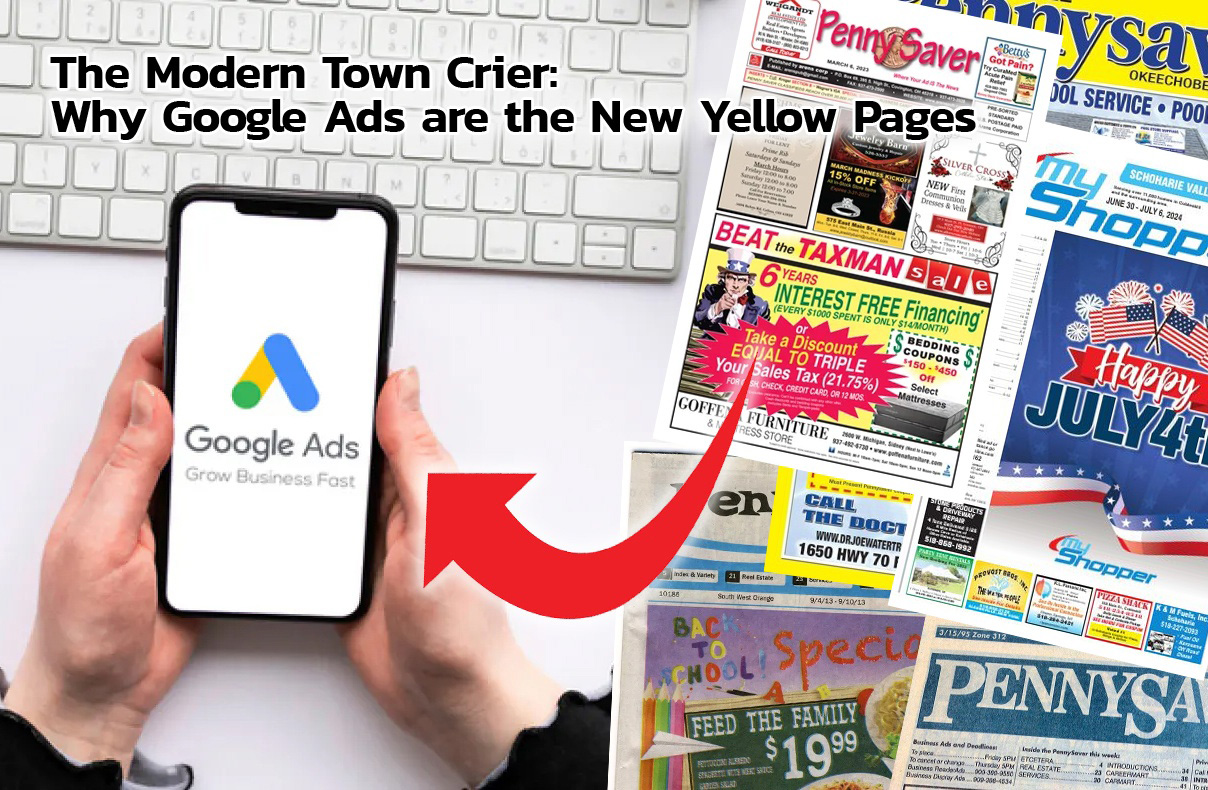
There was a time when every local business in America had a line item in their budget for it. The Yellow Pages. The Penny Saver. The local paper. The Town Crier – whether literal or figurative – was how you let the neighborhood know you existed. Every year, a check went out. Every year, customers came in. It was just part of doing business.
Then the internet happened, and something interesting occurred: a lot of those advertising dollars didn’t get reinvested – they got pocketed. Businesses that used to spend $2,000 a year on a Yellow Pages listing stopped spending it when the book stopped working, and never replaced it with anything. They told themselves word of mouth was enough. That their reputation would carry them. That they didn’t need to pay to be found.
Meanwhile, their competitors figured out where the Town Crier moved.
He’s on Google now.
The Same Problem, A Different Medium
The Yellow Pages solved a specific problem: when someone needed a service, they needed a way to find who offered it nearby. The book was the directory. Being listed meant you existed. Not being listed meant you didn’t.
Google Search is that directory now. When someone in your town needs a plumber, an electrician, a web designer, a caterer – they open their phone and search. The businesses that show up get the call. The ones that don’t, don’t. The mechanism is different but the stakes are identical to what they were in 1987 when the Yellow Pages rep came knocking.
The Penny Saver put your ad in front of people who were already looking through it for deals. Google Ads puts your listing in front of people who are actively searching for exactly what you offer – at the exact moment they’re ready to buy. That’s not a step backward from traditional advertising. That’s a significant improvement over it.
What Google Ads Actually Does
For businesses that remember the old model, here’s how it maps:
- Targeted reach: The Yellow Pages put you in front of everyone in the book – regardless of whether they needed you. Google Ads shows your listing only to people actively searching for your service, in your area, right now.
- Controlled budget: The Penny Saver charged you whether the ad worked or not. With Google Ads, you set what you’re willing to spend and you only pay when someone actually clicks.
- Instant visibility: Organic SEO takes time – months, sometimes longer. Google Ads puts you at the top of results immediately, above the organic listings, for as long as you’re running.
- Measurable results: The old model had no real feedback. You ran the ad, you hoped the phone rang, and you renewed or didn’t. Google Ads tells you exactly how many people saw your ad, clicked it, called you, and converted – so you can refine as you go.
- Local targeting: You can limit your ads to show only within a specific radius of your location, or only in specific zip codes or towns. The Town Crier stayed in the town square. Google Ads stays in your service area.
The Money That Got Pocketed
Here’s the uncomfortable part of this conversation. The businesses that stopped advertising when the Yellow Pages died and never replaced that spend – they didn’t save that money. They spent it on something else, or it just disappeared into overhead. And in the meantime, their competitors kept advertising. Just in a different place.
Local service businesses that went dark on paid advertising in the 2010s lost ground to competitors who moved their budgets to Google. That ground is hard to recover. Organic search rankings take years to build. A reputation that doesn’t show up online doesn’t travel the way it used to when everyone in the neighborhood knew your name.
The good news is that paid search is immediate. You can be visible tomorrow if you decide to start today. The budget you stopped spending on the Yellow Pages is still the right size – it just needs to go somewhere different now.
Is It Worth It?
For local service businesses with a defined geographic area, Google Ads is one of the most efficient ways to spend an advertising budget that exists. The people clicking on your ad are already looking for what you sell. That’s fundamentally different from a billboard, a newspaper ad, or a social media post that interrupts someone who wasn’t thinking about you at all.
If you’re not running any paid advertising right now and your competitors are, you’re not saving money – you’re just making their ads more effective by staying out of the way.
Need Help?
If you want to know what a Google Ads campaign would look like for your business – budget, targeting, what to expect – that’s a straightforward conversation. Reach out anytime.
Research
Google’s own Economic Impact Report estimates that businesses earn an average of $8 in revenue for every $1 spent on Google Ads. Separately, people who click on paid search ads are 50% more likely to make a purchase than those who arrive through organic results – reflecting the high intent of someone actively searching for a specific service at the moment they see your ad.
Source: Google Economic Impact Report